
Begin Your Smile Design
A conversation is the first step
The consultation is where a plan is worked out, not agreed to. Here is what the first appointment involves, what is useful to bring, and the questions people most often want answered before they arrange one.
Before You Come
- Photographs
- One of yourself you like, one you do not
- History
- Any grinding, jaw discomfort or previous work
- Timing
- A date you are working toward, if there is one
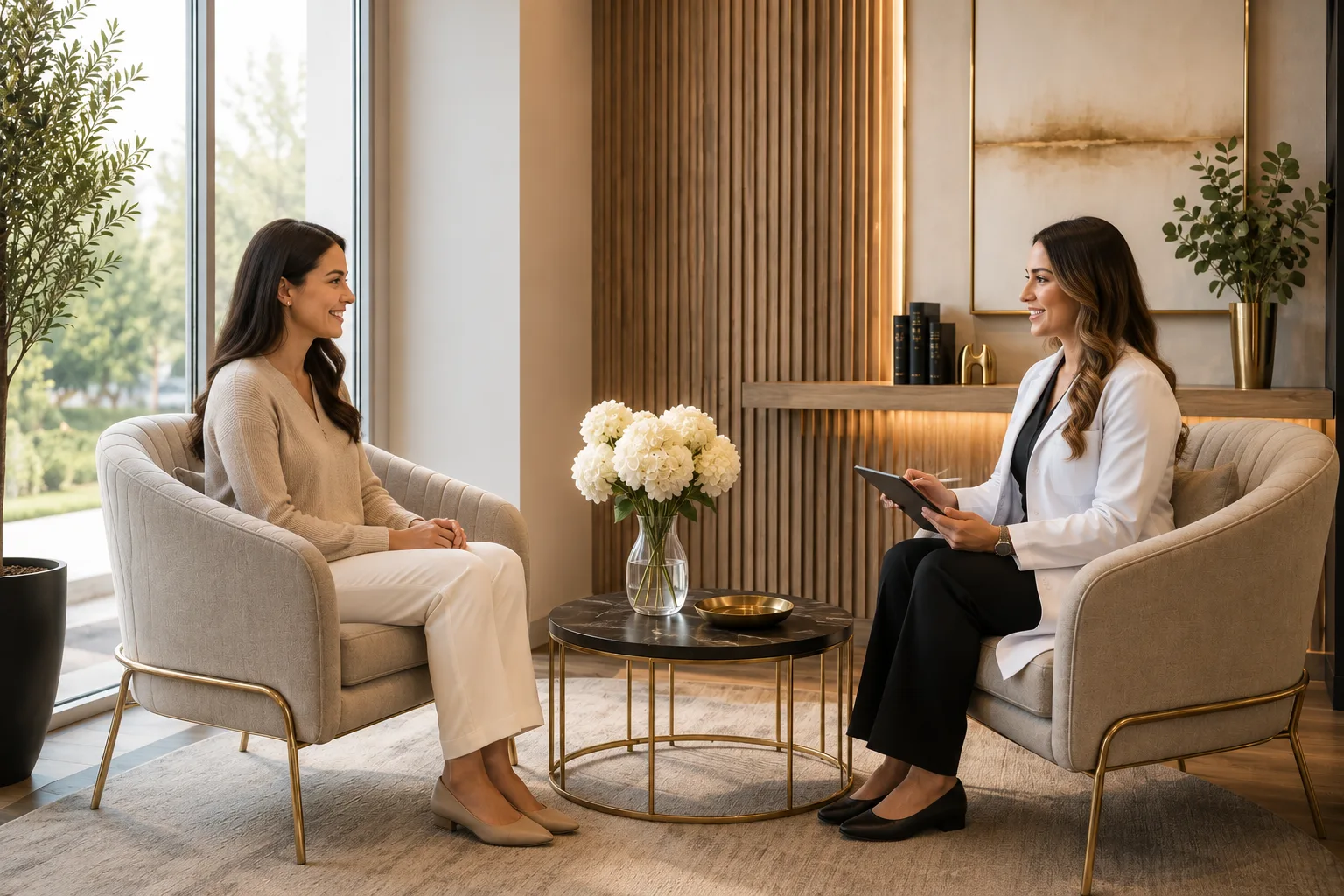
A private appointment at the studio, set aside rather than slotted in — and, for the most part, a conversation.
What Happens Next
Four steps, and none of them are binding
- 01
You send a few details
The form below, or the phone. Nothing you write commits you to anything, and a rough description is enough — most people cannot name what they want changed, which is normal and is the consultation’s job rather than yours.
- 02
We arrange a time
A private appointment at the studio, set aside rather than slotted in. If you are working toward a particular occasion, tell us then rather than later: it can change what we would recommend.
- 03
We look, and mostly listen
Photographs at rest and in motion, an assessment of the underlying health, and a long conversation about what you actually notice and when. You leave with an understanding of what is possible.
- 04
You decide, unhurried
No plan is agreed in the chair. Nothing irreversible happens until you have seen the design and worn the trial version of it, which is the second stage of the method.
Useful to Bring
Two photographs and one honest sentence
A photograph of yourself you dislike and one you like is worth more than any description, because it shows the smile in the light and the angle you actually see yourself in. If you have images of results elsewhere that appeal to you, bring those too, including the ones you found off-putting. Knowing what you do not want narrows a design faster than knowing what you do.
Beyond that: any history of grinding or jaw discomfort, previous cosmetic or orthodontic work, and whether there is a date you are working toward. That is the whole list. Everything else is ours to assess.
If you would rather know what follows before arranging anything, the four stages set out what happens after this appointment, and the treatments page covers what each option actually involves.
Fees & Financing
A written plan before a single fee
Cosmetic work is priced by the plan, not by the visit, so no fee is quoted until the design consultation has settled what the plan actually is. You then receive it in writing, itemised by stage, before deciding anything. Nothing begins until you have that document, and nothing is added to it without your agreement.
Fees are paid in stages that follow the treatment rather than in advance, by card or bank transfer. For larger plans, monthly financing through a third-party provider can be arranged at the studio, and we will tell you plainly what it costs over the term before you sign anything.
Dental insurance rarely covers work chosen for appearance, and we would rather say so now than surprise you later. Where a plan includes a restorative element that a policy may recognise, we provide the itemised documentation to submit a claim.
Begin Your Smile Design
A conversation is the first step
Share a few details and we will reach out to arrange a private consultation at the studio. No pressure — simply the beginning of a considered process.
123 Example Avenue, Suite 900
New York, NY 10001
(000) 000 0000
Questions, Answered
Before you begin
Well‑made porcelain is durable, and the range usually quoted in dentistry is somewhere in the region of ten to fifteen years. Treat that as a range rather than a promise: longevity depends far more on your bite, on whether you grind, and on the health of the gum and tooth underneath than on the ceramic itself. If anything in that picture is likely to shorten the life of the work, we would rather say so before we begin than at a review.
That is the whole design problem, and it is why nothing is made permanent early. The smile is designed digitally against photographs of your own face, then converted into a trial version you wear, so shape, length and how much tooth shows when you speak are judged on you rather than on a screen. Shade and translucency are then built in layers by the ceramist rather than picked from a chart, because natural enamel is neither one flat colour nor uniformly opaque.
It depends on the plan, and any page that gives you a number is guessing. Whitening or bonding is often a single visit. Veneers usually involve a consultation, a design appointment, and a placement visit, with the trial mock‑up in between. A makeover that includes an alignment phase is a longer commitment again, and healing does not consult the calendar. Your particular sequence is mapped out at the consultation, including where the waiting periods fall and why.
Most cosmetic work is gentle and well tolerated. Bonding and whitening are usually done without anaesthetic; where a tooth is being prepared, local anaesthetic is used. Some sensitivity after whitening is common and settles. Appointments here are long by design, which matters more for comfort than it sounds: nothing is rushed toward the next name on a list, and you can stop and ask at any point.
Largely what any healthy mouth needs: careful brushing and cleaning between the teeth, and regular review at the interval you are advised. Porcelain does not decay but the tooth and gum around it still can, and the margin is where problems begin. Beyond that, porcelain can chip under enough force, composite stains and can be repaired or refreshed, and whitening fades and is topped up rather than done once. None of this is onerous, but it is real, and it is worth knowing before rather than after.
Not usually, but it changes the conversation. Grinding puts load on ceramic that ceramic is not designed to absorb indefinitely, so it is assessed before any design is agreed. Where it is present, a protective night guard is normally part of the plan rather than an afterthought, and the design itself may be adjusted to sit more kindly with your bite. What we will not do is place work over an unmanaged habit and hope.
It depends entirely on the plan, which is why we do not publish a price list. After the design consultation you receive the fee in writing, itemised by stage, before you decide anything. Fees are paid in stages as treatment proceeds, financing can be arranged for larger plans, and we will tell you up front that insurance rarely covers work chosen for appearance.
With a conversation and nothing more. Send a few details through the form below or call the studio, and we will arrange a private consultation. Nothing is agreed in that appointment, and nothing irreversible happens until you have seen the design and worn the trial version of it.