
Skip to content
Clario Smile Studio
This is a demonstration website. The practice shown here does not exist. The dentist, credentials, address and phone number are fictional, no dental services are offered, and no appointment can be booked.

Signature Treatments

Six ways to arrive at the same quiet result

These are the treatments the studio is built around. What follows is what each one actually is, how the appointments tend to go, and the kind of smile it genuinely suits — including where we would point you somewhere else instead.

How We Decide

The treatment is chosen last

Nobody arrives wanting a procedure.

They arrive wanting a smile that stops catching their attention in photographs. So the first conversation is not about which of the six below you would like; it is about proportion, lip line, brightness and the character of your face, and what specifically is not sitting right.

Only once that picture is clear does a treatment name attach itself to it, and often it is the simpler one. Brightening sometimes resolves what somebody came in intending to fix with porcelain. Moving a tooth into the right position is more conservative than disguising its position with ceramic. We would rather tell you that at the consultation than after.

Several of these are also frequently combined and sequenced. Where that is the case, the order matters as much as the choice, and it is set out for you before anything begins — that sequencing is the second stage of the method, and nothing irreversible happens before you have approved it.

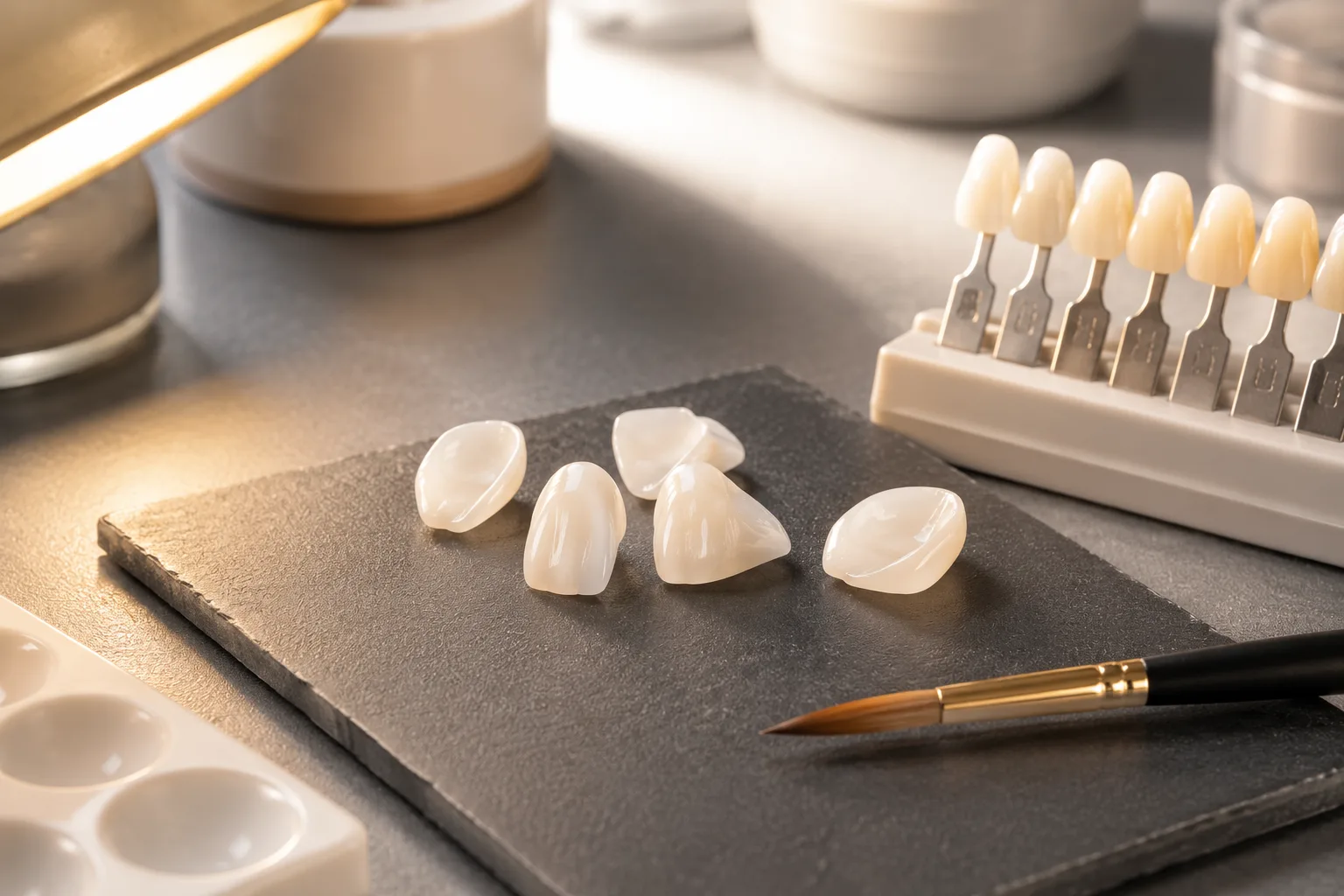
Porcelain veneer shells and a shade guide on a workbench, beside a fine brush

Shade and translucency are judged against a physical shade guide and finished by hand, not specified as a number and ordered in.

01

Porcelain Veneers

Ultra-thin, hand-layered ceramic shells designed to refine shape, proportion and shade with a translucency that reads as entirely natural.

What it involves
A design phase comes first: photographs, facial proportion, lip dynamics and the character of your existing teeth. Only then is any tooth prepared, and we prepare as little as the result allows. Each shell is then built up by hand in thin layers of porcelain by our ceramist. That is what allows shade and translucency to be varied through the depth of the tooth — denser toward the gum, more translucent toward the edge, with faint surface texture placed rather than polished away — instead of being characterised on the surface of a single uniform shade.
What to expect
Typically a consultation, a design and preparation appointment, and a placement visit, with a wearable trial mock-up in between so you can live with the shape before anything is permanent. Local anaesthetic is used where appropriate and the work is unhurried by design.
Who it suits
People who want to change shape, proportion or shade rather than simply brighten, and who would rather the change go unremarked than be noticed. If the underlying position of your teeth is the real issue, we will usually suggest alignment first and say so plainly.
02

Complete Smile Makeover

A comprehensive, fully planned transformation, combining the treatments your smile calls for into one cohesive, artful result.

What it involves
Not a single procedure but a plan. Alignment, brightness, gum line and tooth form are considered together, sequenced so each stage sets up the next, and drawn as one design rather than assembled from separate treatments done in isolation.
What to expect
The longest of our pathways and the most collaborative. You will see the design digitally, then wear a trial version, and we will revise it with you before anything is finalised. The plan and its stages are mapped out at the start so nothing arrives as a surprise.
Who it suits
Anyone whose concerns are not confined to one thing, and who would rather resolve them as a coherent whole than piecemeal over years. It is also the right conversation if previous cosmetic work no longer sits comfortably with the rest of your face.
03

Professional Whitening

In-studio and take-home brightening calibrated to your enamel, lifting years of staining toward a clean, luminous tone.

What it involves
An assessment of what is actually causing the discolouration, because surface staining, intrinsic shade and old restorations respond very differently. The concentration and approach are then matched to your enamel rather than applied as a standard protocol.
What to expect
The gentlest of our treatments and often the shortest. Some sensitivity afterwards is common and settles. Existing crowns, veneers and bonding do not lighten with the natural teeth, so we plan the order of work around that rather than discovering it later.
Who it suits
People whose shape and alignment already please them and whose concern is tone alone. It is also frequently the honest first step: brightening first sometimes removes the reason someone came in considering veneers.
04

Composite Bonding

Sculpted, tooth-coloured resin to close gaps, reshape edges and correct small imperfections, refined in a single, gentle visit.

What it involves
Resin is added and shaped directly onto the tooth, then contoured and polished by hand. It is additive, which means little or no natural tooth is removed. The artistry is entirely in the sculpting and the finish.
What to expect
Usually completed in one appointment, most often without anaesthetic. Composite is more susceptible to staining and chipping than porcelain over time, and can be repaired or refreshed. We would rather you hear that at the outset than at the review.
Who it suits
Small corrections rather than wholesale change: a chipped edge, a narrow gap, a slightly short tooth. It is also a reasonable way to try a shape before committing to porcelain.
05

Gum Contouring

Precise, conservative reshaping of the gum line to balance proportions and frame the teeth with quiet symmetry.

What it involves
Careful reshaping of the soft tissue so the frame around the teeth is even and the visible tooth length reads in proportion. Often a small part of a larger design rather than a treatment sought on its own.
What to expect
A short, precise appointment with a settling period afterwards while the tissue matures. Where contouring precedes veneers or bonding, we allow that healing to complete before the design is finalised, because the frame determines the proportions.
Who it suits
Smiles where the teeth themselves are sound but the gum line is uneven or sits low enough to make the teeth look shorter than they are. It is a question of framing, and it is best assessed in person.
06

Clear Aligner Finishing

Discreet alignment to perfect positioning and bite, the elegant final note before cosmetic detailing.

What it involves
A sequence of removable clear trays that move teeth gradually into position. In a cosmetic plan it usually comes first, not last, because moving a tooth into the right place is more conservative than disguising its position with ceramic.
What to expect
Trays worn for most of the day and changed on a schedule, with periodic reviews. It asks more of you than any other treatment here, since the result depends on wear time. Once positions have settled, any cosmetic detailing is planned on top.
Who it suits
People whose teeth are fundamentally the right shape but the wrong place, and anyone who would prefer to move teeth rather than remove tooth structure to fake the alignment.

Nothing above is a quotation or a commitment. Suitability, sequence and timing can only be judged in person, and they differ from one smile to the next.

The Limits

What cosmetic dentistry cannot change

Worth reading before a consultation rather than after one. None of this is unusual or discouraging; it is simply the shape of what is possible, and it is easier to plan well when it is known at the start.

It does not come first

Decay, an active gum problem or a failing restoration is treated before any cosmetic plan begins. Ceramic placed over an unsound foundation inherits the problem underneath it, and the design is only as stable as the tooth and gum holding it.

It does not whiten existing work

Crowns, veneers and bonding keep the shade they were made in. Whitening lifts natural enamel only, so where tone is going to change it changes first and any restoration is then matched to the new shade — never the other way round.

It does not stop a grinding habit

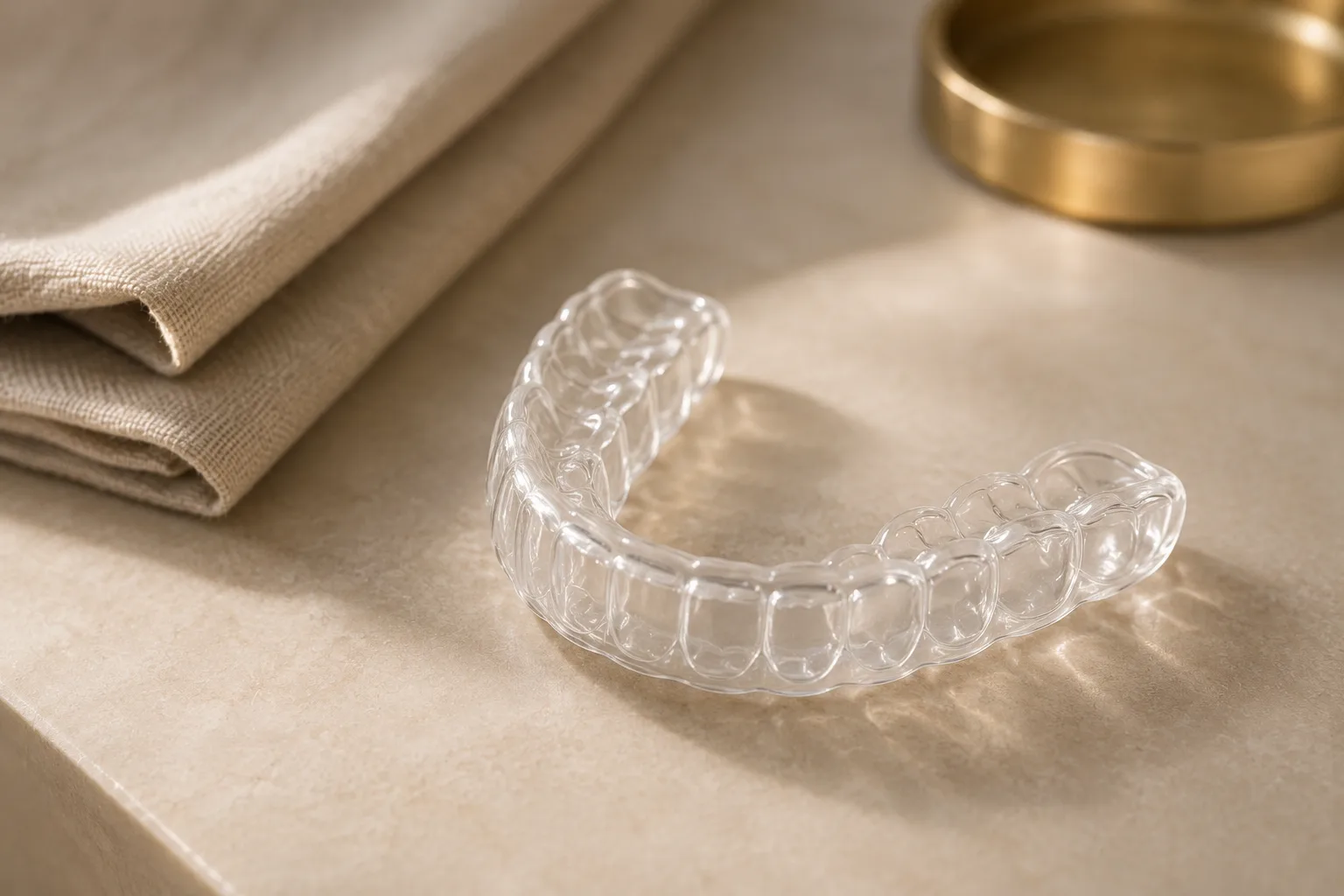
Restorations manage the consequences of grinding; they do not address the habit itself. Where it is present, a protective guard is part of the plan, and the design is made to sit more forgivingly with the bite rather than to resist it.

It does not resolve a jaw joint problem

Persistent jaw pain, locking or clicking is a separate matter from the appearance of the teeth and is assessed as one. Building a cosmetic result on an unsettled bite is how work that looked right at placement stops feeling right later.

It cannot outrun the face around it

Shade is limited by what the skin and eyes around it support, and tooth position is limited by lip line and the amount of tooth that shows. A result that ignores the frame is correct in isolation and wrong in a photograph.

It is not permanent

Every restoration has a service life, and at some point it is refreshed or replaced. Conservative preparation matters precisely because of that: the less natural tooth removed now, the more straightforward that conversation is in twenty years.

A clear custom night guard resting on a stone surface beside folded linen

Where grinding is present, a protective guard is part of the plan — the design is made to sit with the bite rather than to resist it.

Afterwards

Living with the result

Cosmetic work is not a thing you finish. It is a thing you then look after, and how well it is looked after decides most of how long it lasts.

The daily part is unglamorous and it is most of the answer: careful brushing, cleaning between the teeth, and review at the interval you are advised. Porcelain itself does not decay, but the tooth and the gum around it still can, and the margin where the two meet is where trouble starts.

Healthy gums are not a separate concern from a cosmetic result; they are the frame it sits in.

Each material also ages in its own way. Porcelain holds its colour but can chip under enough force, which is why a grinding habit is assessed before a design is agreed and usually managed with a night guard. Composite is kinder to the tooth and easier to repair, but it picks up stain and will want refreshing. Whitening fades rather than failing, and is topped up rather than done once.

One consequence of that is worth stating plainly, because it surprises people: ceramic and existing bonding do not lighten with whitening. If tone is going to change, it changes before the shade of any restoration is chosen, not after. Getting that order wrong is one of the few genuinely expensive mistakes in cosmetic dentistry, and it is entirely avoidable by sequencing the plan properly at the start.

Begin Your Smile Design

Not sure which of these is yours?

That is the usual starting point, and it is the consultation's job rather than yours. Tell us what you would like to change and we will work out the rest together.

Request a consultation